
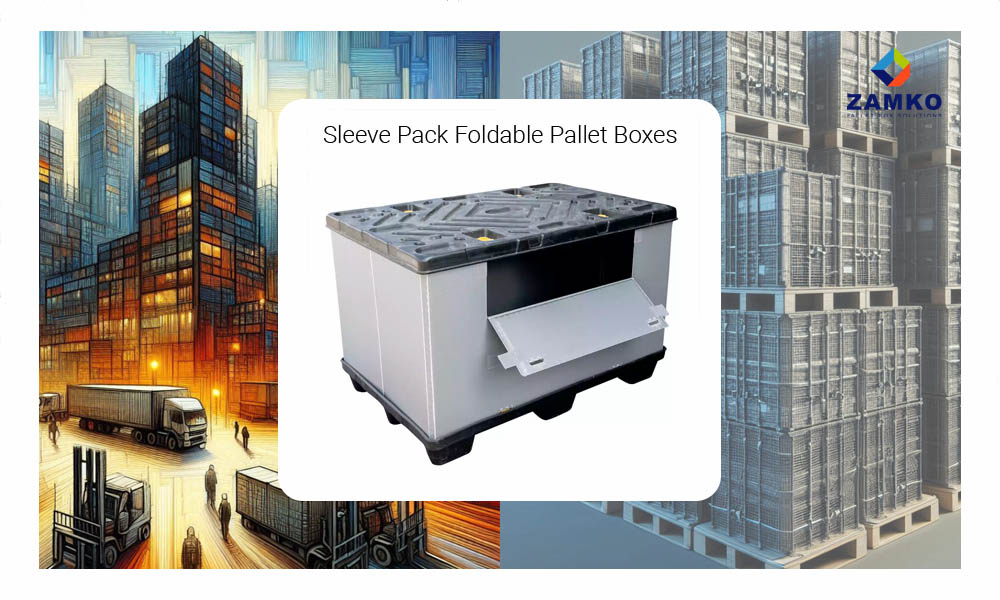
Die tatsächlichen Kosten eines Sleeve Packs sind nicht der Kaufpreis
Die meisten Einkäufer beginnen mit der Frage: Was kostet ein Sleeve Pack? Das ist die falsche Frage. Dieser Artikel unterstützt den umfassenden Sleeve Pack Einkaufsleitfaden und konzentriert sich nur auf Kosten, Total Cost of Ownership und Beschaffungswirtschaftlichkeit.
Ein Sleeve Pack für EUR 100, der über fünf Jahre 130 Umläufe erreicht, hat Abschreibungskosten von EUR 0,77 pro Umlauf. Eine Einweg-Karton-Palettenbox für EUR 14, die einmal verwendet wird, kostet EUR 14,00 pro Umlauf - allein bei der Abschreibung mehr als 18-mal so viel.
Aber Abschreibung ist nur ein Teil der Rechnung. Wenn Rücktransport, Handling, Schäden, Reinigung und Entsorgung hinzukommen, liegen die vollständigen Kosten pro Umlauf bei Einwegkarton bei EUR 16,68 gegenüber EUR 4,93 für einen Sleeve Pack - eine Einsparung von EUR 11,75 pro Umlauf, bei jedem Umlauf, über die Lebensdauer der Flotte.
Dieser Leitfaden liefert das Rechenmodell für Ihre eigenen Zahlen und erklärt, warum eine reine Optimierung auf den niedrigsten Kaufpreis in einem geschlossenen Mehrwegkreislauf zur höchsten Gesamtkostenposition führen kann.
Warum Beschaffungsteams häufig die falsche Verpackung wählen
Viele Verpackungsentscheidungen beginnen mit einem Angebotsvergleich. Ein Einkäufer erhält mehrere Preise und vergleicht den Stückpreis jeder Verpackungslösung. Das ist nachvollziehbar, ignoriert aber häufig die Kosten, die nach der Anlieferung der Verpackung entstehen.
In vielen Lieferketten ist der Kaufpreis nur ein Bruchteil der Gesamtkosten. Rücktransport, Handling, Reinigung, Reparaturen, Lagerfläche, Entsorgung und Produktschäden können die Anfangsinvestition über die Lebensdauer eines Verpackungssystems deutlich übersteigen.
Bei Einwegverpackungen liegen Kaufpreis und Lebenszykluskosten oft nahe beieinander, weil die Verpackung nur einmal genutzt wird. Bei Mehrwegverpackungen ist der Zusammenhang anders. Ein höherer Kaufpreis kann zu niedrigeren Kosten pro Sendung führen, wenn die Verpackung länger hält, effizienter für den Rücktransport zusammenklappt oder Handling- und Schadenskosten reduziert.
Deshalb vergleichen erfahrene Beschaffungsteams Verpackungssysteme zunehmend anhand der Kosten pro Umlauf statt nur anhand des Stückpreises.
Ein praktischer Bewertungsrahmen für die Beschaffung
Beim Vergleich von Mehrwegverpackungssystemen sollten Beschaffungsteams mehrere Kostentreiber gleichzeitig bewerten, statt sich ausschließlich auf den Anschaffungspreis zu konzentrieren.
Die wichtigsten Faktoren sind typischerweise:
- Kosten pro Versandumlauf
- Erwartete Nutzungsdauer
- Effizienz im Rücktransport
- Produktschutzleistung
- Reparierbarkeit und Wartungsanforderungen
Diese Faktoren beeinflussen sich gegenseitig. Ein Verpackungssystem mit höherem Kaufpreis kann niedrigere Lebenszykluskosten erreichen, wenn es länger hält, leer effizienter zurückgeführt wird, Produktschäden reduziert oder im Betrieb weniger Ersatzbeschaffungen verursacht.
Darum bewerten erfahrene Einkäufer Verpackungen mit Total Cost of Ownership statt nur mit Stückpreislogik.
Gesamtkosten pro Umlauf: Sleeve Pack versus Einwegkarton
Basierend auf einem realistischen europäischen geschlossenen Mehrwegscenario: zweiwöchentliche Sendungen (26 Umläufe/Jahr), EUR 100 Sleeve Pack, fünf Jahre Nutzungsdauer (130 Umläufe gesamt), 400 km Rückführkreislauf, EUR 350/Lkw FTL-Tarif und EUR 35/h Lagerarbeitskosten.
Kostenelement | Sleeve Pack / Umlauf | Einwegkarton / Umlauf | Berechnungsbasis |
Abschreibung | 0,77 EUR | 14,00 € | Hülsenverpackung: EUR 100 / 130 Zyklen. Karton: EUR 14 pro Einheit, 1 Zyklus. |
Ausgangstransport | EUR 0,40 | EUR 0,40 | Gleich – gleicher beladener LKW und gleicher Abdruck. |
Rücktransport (leer) | 1,35 EUR | EUR 0,00 | Hüllenpaket: 260 zusammengelegte Einheiten pro Planen-LKW zu 350 EUR/LKW. Karton: vor Ort entsorgt. |
Handling und Arbeit | EUR 1,75 | 0,88 € | Hülsenverpackung: 3 Min. zu 35 €/Stunde. Karton: 1,5 Min. zu 35 €/Stunde. |
Reinigung | EUR 0,16 | EUR 0,00 | Druckreinigung alle 50 Zyklen zu 8 € pro Reinigung. |
Schäden und Reklamationen | 0,15 € | 0,80 EUR | Geschlossene Wände reduzieren viele Handhabungs- und Transportschäden. |
Reparatur / Austausch | EUR 0,35 | EUR 0,00 | Bei ca. 10% der Flotte müssen pro Jahr Hülsen oder Deckel ausgetauscht werden, zu einem Durchschnittspreis von 35 EUR pro Teil. |
Entsorgung / Abfall | EUR 0,00 | EUR 0,60 | Kartonagenannahme, Ballenpressen oder Deponie für ca. 0,60 EUR/Einheit. |
GESAMTKOSTEN pro Umlauf | 4,93 EUR | 16,68 € | Einsparung: 11,75 € pro Zyklus. |
Jährliche Kosten pro Sleeve Pack (26 Umläufe) | EUR 128.18 | EUR 433.68 | Annual saving per sleeve pack: EUR 305.50. |
Quellenhinweis: Die Frachtannahmen basieren auf europäischer FTL-Benchmark-Logik. Ein Arbeitskostensatz von EUR 35/h entspricht typischen europäischen industriellen Lagerkosten. Passen Sie alle Werte an Ihre eigene Route, Lohnkosten, Beladungsdichte und Schadensquote an.
Wann Total Cost of Ownership besonders wichtig ist
Die Bedeutung der Total-Cost-of-Ownership-Analyse hängt stark davon ab, wie oft die Verpackung wiederverwendet wird.
Logistikszenario | Bedeutung der TCO-Analyse |
Einmalige Exportsendung | Niedrig |
Gelegentliche Sendungen (1-4 Umläufe/Jahr) | Mittel |
Monatliche geschlossene Mehrwegtransporte | Hoch |
Wöchentliche geschlossene Mehrwegtransporte | Sehr hoch |
Tägliche Shuttle-Verkehre zwischen Werken | Kritisch |
Ein Sleeve Pack, der sechsmal pro Jahr eingesetzt wird, verhält sich wirtschaftlich völlig anders als ein Sleeve Pack, der zweiundfünfzigmal pro Jahr eingesetzt wird. Der Anschaffungspreis bleibt identisch, aber die Kosten pro Versandumlauf unterscheiden sich deutlich, weil die Investition über eine viel größere Anzahl von Nutzungen verteilt wird.
Mit steigender Umlauffrequenz werden Faltverhältnis, Reparierbarkeit, Nutzungsdauer und Effizienz im Rücktransport immer wichtiger. In vielen hochfrequenten Logistikkreisläufen haben diese Faktoren einen größeren Einfluss auf die Gesamtkosten als der ursprüngliche Kaufpreis.
Amortisation und 5-Jahres-Rendite
Bei EUR 100 Kaufpreis und einer jährlichen Einsparung von EUR 305,50 pro Sleeve Pack beträgt die Amortisationszeit 3,9 Monate. So lange dauert es, bis jeder Sleeve Pack mehr einspart, als er in der Anschaffung gekostet hat.
Über fünf Jahre und 130 Umläufe beträgt der Nettoertrag nach Abzug des Kaufpreises EUR 1.427,50 pro Sleeve Pack - eine Rendite von 1.428% auf die Investition.
Die Umlauffrequenz verändert die jährliche Einsparung, aber nicht die Einsparung pro Umlauf von EUR 11,75:
Versandfrequenz | Jährliche Einsparung pro Sleevepack System | Amortisationszeit |
Monatlich (13 Umläufe/Jahr) | EUR 153 | 7,9 Monate |
Zweiwöchentlich (26 Umläufe/Jahr) | EUR 306 | 3,9 Monate |
Wöchentlich (52 Umläufe/Jahr) | EUR 611 | 2,0 Monate |
Täglich (260 Umläufe/Jahr) | EUR 3,055 | < 1 Monat |
Für den breiteren Beschaffungskontext über mehrere Mehrwegverpackungssysteme hinweg siehe den Einkaufsleitfaden für Mehrwegverpackung.
Wichtige Strategien zur Senkung der gesamten Sleeve Pack Kosten
Sobald Sie akzeptieren, dass der Kaufpreis nur ein Kostenbestandteil ist, werden die echten Optimierungshebel klarer:
- Pro Vollcontainer oder Voll-Lkw einkaufen - größere Mengen reduzieren den Stückpreis häufig um 10-20%.
- Abmessungen auf Ware, Regale und Transportmuster abstimmen - falsche Größen erzeugen Leerraum und unnötige Handlingkosten.
- Nur notwendige Optionen auswählen - Verschlüsse, Sonderfarben und Bedruckung erhöhen die Kosten.
- Die richtige Tragfähigkeit wählen - Überdimensionierung erhöht Materialkosten ohne entsprechenden operativen Nutzen.
- Geprüfte gebrauchte Sleeve Packs prüfen, wenn die Anwendung dafür geeignet ist - gute Gebrauchtware kann die Anschaffungskosten deutlich senken.
Wie die Verpackungsspezifikation die Gesamtkosten beeinflusst
Die Auswahl der richtigen Sleeve Pack Spezifikation ist nicht nur eine technische Entscheidung. Sie beeinflusst auch die Lebenszykluskosten.
A common mistake is to over-specify the packaging. Higher load capacities, additional options, custom colours, special closure systems and premium materials all increase acquisition cost. In many operations these additional features provide little practical benefit.
Procurement teams should focus on the requirements that genuinely influence operational performance:
- load capacity
- handling method
- storage and racking requirements
- return transport efficiency
- expected service life
The objective is not to purchase the most sophisticated sleeve pack, but to identify the specification that delivers the lowest total cost over the expected number of shipment cycles.
Economic and Environmental Benefits
Reusable packaging such as sleeve pack boxes can deliver both financial and environmental performance when the logistics loop is suitable.
- High-quality sleeve packs can remain in service for many years and hundreds of cycles, which reduces depreciation per shipment.
- Each reusable container can replace large numbers of single-use boxes over its service life.
- Circular packaging systems are increasingly relevant for ESG and CSRD reporting when cycle data, repair history and end-of-life handling are documented.
For a deeper environmental view, see the lifecycle analysis of sleeve packs.
Common Procurement Mistakes When Comparing Packaging Costs
Many packaging purchasing decisions are made under time pressure. As a result, procurement teams often focus on the figures that are easiest to compare: supplier quotations and unit prices. While understandable, this approach can create misleading conclusions.
The most common mistake is comparing the purchase price of different packaging systems without comparing their expected cost per shipment cycle. A sleeve pack costing EUR 100 may initially appear expensive compared to a one-way solution costing EUR 14. However, if the sleeve pack completes more than one hundred cycles during its service life, the acquisition cost becomes only a small component of the total cost.
Another common mistake is ignoring return transport economics. The ability to collapse sleeve packs significantly reduces empty transport volume, which can have a larger impact on lifecycle cost than the initial purchase price itself.
Procurement teams also frequently over-specify packaging. Higher load capacities, additional options, custom colours and specialised features increase acquisition cost without necessarily improving operational performance.
Hidden Cost Drivers That Are Often Ignored
Most packaging cost calculations include purchase price and transport cost. Far fewer include the secondary costs that accumulate throughout the life of a packaging system.
Kostentreiber | Frequently included in cost calculations? |
Kaufpreis | Usually |
Ausgangstransport | Usually |
Rücktransport | Sometimes |
Schäden am Produkt | Sometimes |
Warehouse handling | Rarely |
Reinigung | Rarely |
Repairs | Rarely |
Disposal costs | Rarely |
Storage space utilisation | Rarely |
Individually, these cost elements may appear relatively small. Over dozens of shipment cycles, however, they can materially influence the economics of a packaging system.
For a broader explanation of logistics cost reduction through reusable packaging, see wie wiederverwendbare Transportverpackungen Logistikkosten senken.
Why Packaging Cost Models Often Underestimate Reusable Systems
Many packaging evaluations are built around annual purchasing budgets. This naturally emphasises acquisition cost because it is visible immediately.
Reusable packaging behaves differently. The investment occurs upfront, while many of the benefits are realised gradually over years of operation. As a result, traditional cost models often underestimate the economic value of reusable systems.
For example, lower damage rates may reduce product losses. Better folding ratios may reduce return transport costs. Longer service life may spread acquisition cost over hundreds of shipment cycles. These benefits rarely appear on the original supplier quotation, yet they can have a significant impact on total cost.
This does not mean reusable packaging is always the correct choice. It means that evaluations should consider both acquisition cost and lifecycle performance before comparing alternatives.
Example: Evaluating a Typical Automotive Logistics Loop
Consider an automotive supplier shipping components between two production locations twenty-six times per year.
The supplier compares a sleeve pack costing EUR 100 with a one-way cardboard alternative costing EUR 14 per shipment. At first glance, the cardboard solution appears less expensive. However, after accounting for lifecycle cost, return transport efficiency, handling, damage reduction and service life, the economics change significantly.
Using the assumptions presented in this guide, the sleeve pack generates approximately EUR 306 in annual savings while achieving payback in less than four months.
For a real-world logistics example, see the Fallstudie eines bulgarischen Automobilzulieferers.
Why Different Industries Reach Different Conclusions
Packaging economics are rarely universal. The same packaging system can produce very different results depending on the characteristics of the supply chain.
In automotive logistics, high shipment frequency often makes lifecycle cost the dominant decision factor. In beverage packaging, transport density and storage efficiency may play a larger role. For PET preforms and bottle caps, lightweight but high-volume products create a strong focus on cube utilisation and return transport efficiency.
Similarly, industries handling heavy industrial components may place greater emphasis on load capacity and durability than on folding efficiency.
This is why two companies evaluating the same sleeve pack may arrive at different conclusions. The correct packaging decision depends not only on the container itself, but also on shipment frequency, transport distance, return logistics, handling requirements and the nature of the product being transported.
When Sleeve Packs Are Not the Best Choice
Sleeve packs can deliver substantial savings in many closed-loop supply chains, but they are not the best solution for every application.
Situation | Alternative worth considering |
One-way export shipments | Cardboard pallet boxes |
Very low shipment frequency | One-way packaging |
Heavy products or high point loads | Drahtgitterboxen |
Short-term projects | Rental or short-term hire |
Applications requiring limited protection | Simpler transport packaging |
Products with very high weights or concentrated point loads may be better suited to Gitterboxen aus Draht, which are designed for demanding industrial handling environments.
The objective should never be to select sleeve packs by default. The objective is to identify the packaging system that delivers the lowest total cost and the best operational fit for the specific logistics process.
What Experienced Procurement Teams Learn Over Time
Companies that are new to reusable packaging often focus on acquisition cost. This is understandable because purchase price is the easiest figure to compare between suppliers.
However, organisations that have operated returnable packaging systems for several years typically evaluate packaging differently. Their attention gradually shifts from purchase price to cost per cycle, return transport efficiency, service life, repairability and operational performance.
In many mature returnable packaging operations, the difference between a EUR 90 and a EUR 110 sleeve pack becomes relatively insignificant compared to the long-term impact of transport costs, handling efficiency, damage reduction and lifespan.
Experienced procurement teams therefore tend to ask different questions:
- How many cycles can the packaging realistically achieve?
- What is the expected cost per cycle?
- How efficiently can empty packaging be returned?
- How easily can damaged components be repaired or replaced?
- How does the packaging influence warehouse and transport operations?
This shift in perspective explains why companies operating high-frequency logistics loops often evaluate packaging systems using lifecycle economics rather than acquisition cost alone.
Why Cost Per Cycle Matters More Than Unit Cost
A common mistake when evaluating packaging is comparing unit prices without considering how often the packaging will be used.
In the example used throughout this guide, a EUR 100 sleeve pack completing 130 shipment cycles has an acquisition cost of approximately EUR 0.77 per cycle.
By comparison, a cardboard pallet box costing EUR 14 and used once has an acquisition cost of EUR 14.00 per cycle.
Although the sleeve pack appears more expensive at the point of purchase, the economics change significantly when costs are distributed across the full service life of the packaging.
This illustrates why experienced procurement teams focus on lifecycle economics rather than purchase price alone. In most closed-loop logistics systems, the relevant comparison is not unit cost but cost per completed shipment cycle.
Related Resources
For broader sleeve pack context, see the Sleeve Pack Einkaufsleitfaden Leitfaden.
For comparison with another returnable packaging format, read sleeve packs versus foldable pallet boxes.
For real-world implementation, see the automotive packaging case study.
For environmental impact, see the lifecycle analysis of sleeve packs.
Häufig gestellte Fragen (FAQs)
At what cycle frequency do sleeve packs become more economical than one-way packaging?
There is no universal break-even point because transport costs, handling costs, packaging prices and return logistics vary. In many closed-loop systems, sleeve packs become increasingly attractive as shipment frequency increases.
Which cost elements are most often overlooked when evaluating packaging systems?
Companies frequently focus on purchase price and outbound transport while underestimating return transport, handling labour, product damage, repairs, cleaning, disposal costs and warehouse efficiency.
Are sleeve packs always the most economical solution?
No. One-way packaging may be more economical for export shipments without return flows. Applications involving very heavy products may also favour alternative packaging systems such as mesh wire pallet cages.
How does return transport influence total cost?
Return transport is often one of the most important variables in reusable packaging economics. Foldable packaging systems reduce empty transport volume, allowing more units to be returned per truckload and lowering cost per cycle.
How should procurement compare different sleeve pack quotations?
Purchase price should be evaluated alongside expected service life, repairability, folding ratio, handling efficiency and projected cost per shipment cycle. Comparing quotations on price alone rarely provides an accurate picture of long-term economics.
How should procurement teams compare reusable packaging suppliers?
Procurement teams should evaluate suppliers based on lifecycle performance rather than purchase price alone. Important criteria include expected service life, repairability, replacement-part availability, fold ratio, transport efficiency, product protection performance and projected cost per shipment cycle.
Comparing suppliers using these factors provides a more accurate picture of long-term economic performance than unit price comparisons alone.
When is a rental or short-term hire model preferable?
Rental and short-term hire can be attractive when shipment volumes fluctuate significantly, when capital expenditure must be minimised, or when organisations prefer outsourced fleet management and maintenance.
Inhaltsübersicht
Umschalten auf